
Dentures
Dentures
Our Services
Dentures
Dentures: types and advances in implantology at Wellington Point Dental
In recent years, there have been great advances in the field of implantology that have led to an improvement in the quality of life of patients, leaving aside the uncomfortable removable full dentures and winning in safety and aesthetics.
What are dentures?
They are removable prostheses to replace missing teeth. Depending on the number of the missing teeth, we could make partial or complete dentures. Partial dentures utilise the some teeth for anchorage. On the other hand, complete dentures happen when there are no remaining teeth in the arch, relying completely on the gums to sit in.
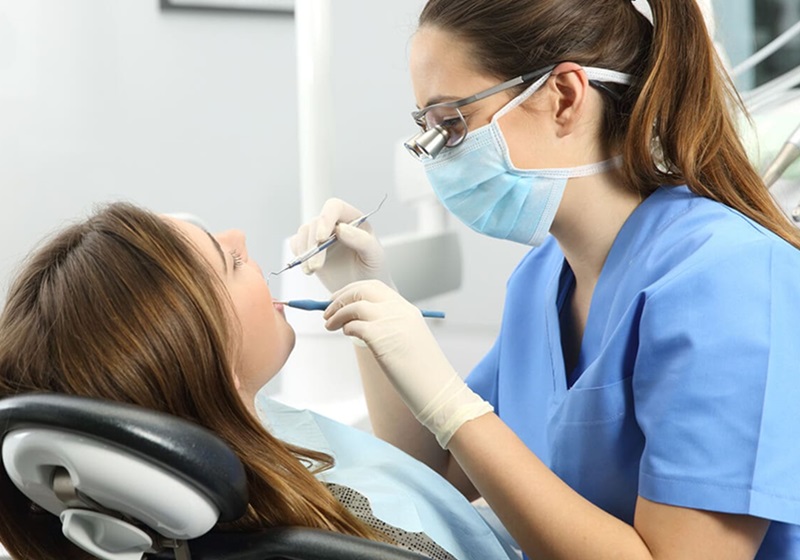
Although it is the most economical method, it has great deficiencies:
Special care should be taken with what is eaten and avoid, as far as possible, hard or sticky substances that are difficult to chew that threaten the prosthesis.
It requires a period of adaptation to speak properly. It is especially difficult to pronounce some sounds, especially those in which the tongue must rest on the palate or the inside of the teeth.
Because of removable in nature, the stability of dentures may be affected. Especially that of the one placed in the lower arch. The feeling that the prosthesis is not fixed is very pronounced among people who wear dentures.
These prostheses are fastened thanks to products such as fixing pastes or adhesive strips, although it is true that over time they lose their efficiency and can even alter the taste of food.
How we adapt to a denture at Wellington Point Dental
Initially, it requires an adaptation period. We can take into account a series of recommendations to make this period more bearable such as:
- Try to eat soft and easy to digest foods that do not force us to force chewing.
- The fact of not pronouncing some sounds properly should not make us complex. A good exercise is to read aloud to practice pronunciation and adapt more quickly to the presence of the prosthesis in the mouth.
- If, during the first days, the denture causes us some sore or wound in the mouth, we should see the dentists as soon as possible. It is common for the prosthetic to make some adjustments to the prosthesis so that it fits perfectly in our jaw.
- We will rely on the use of specific adhesives for dentures that ensure their support and prevent the appearance of sores.
- We should not be alarmed if we secrete more saliva than usual, it is a normal symptom until our mouth gets used to the presence of the prosthesis.
- To avoid possible infections, we must pay attention to the hygiene of our prosthesis.
How to clean dentures?
Maintaining good care of your prosthesis is essential to avoid infections and other oral conditions. For this, you must follow a series of guidelines regarding the hygiene of your teeth:
- Wash your prosthesis with neutral soap and a specific nylon bristle brush for this case.
- Insert the prosthesis into a glass of water and add a product indicated for cleaning it. Keep it soaking for as long as the product manufacturer indicates. This way, you will be sure to eliminate the bacteria that cause bad breath and inflammation in the gums.
- Rinse the denture with cold water and dry it properly.
Also, we must not forget to maintain good hygiene of our mouth. In case you wear a complete removable prosthesis, brush your gums with a soft bristle brush.
For more info and cost of dentures and treatment please call our caring team:
PH: 07 3207 3911.
Our address- 7/391 Main Road, Wellington Point, Qld 4160, Australia
